
Technology
Careers
What does the AI gender gap really expose?
|
Amberley Davis
Women’s slower adoption of AI may reflect more than reluctance: it could reveal a workplace where the risks of using these tools are not shared equally.
It’s thought that women currently only make up to one-third of the AI-skilled workforce. But should we really label this an AI gender gap that needs to be levelled in much the same way that the gender pay gap, or health gap, needs to close? Or does the divide speak to a difference in approach that tells us more about what needs to change?
A different risk-and-reward equation
When we see stats like AI-skilled workers are 71% men and 29% are women, it’s easy to think of the gender gap in terms of straightforward AI use - and who is adapting faster. But the growing body of research shows a more complex picture.
Women, for example, are also more likely to say that AI will negatively affect society and themselves personally in the future. But it’s important not to make assumptions about gendered behaviours here. The idea that women are generally more cautious, or more tuned in to the ethics of AI, is itself reductive. The AI gender divide is likely a mixed bag of factors, including access, risk calculation and socialisation.
Jackie Cook, a leadership coach, works at the intersection of organisational leadership, human behaviour and AI adoption: “I think there is an important distinction in the AI gender divide: we may be measuring the gap by speed and frequency of adoption when we should also be examining the conditions under which people are willing to adopt it.”
Read more: Why AI is making us treat people worse at work
Workplace biases
Existing biases are showing up in how AI use is supported, recognised and criticised at work. According to data from women’s leadership nonprofit Lean In, men are significantly more likely to report more encouragement, training and praise from management around AI use.
In contrast, a study run by the Harvard Business Review suggests that women are judged more harshly for using the technology. For the same AI-assisted code, reviewers in the study were more likely to question the worker’s fundamental abilities when they believed the code had been produced by a woman.
These kinds of results help us to reframe the headline statistics around the AI gender divide. What can at first look like straightforward reluctance, may on closer inspection reflect a set of circumstances that, on balance, make AI use a riskier professional move for half the population.
Srinivas Chippagiri, who helps businesses build AI-platform infrastructure, puts it like this: “This double standard is not a fact about AI. It is a fact about how we judge whose work is authentically their own, and how this will quietly shape who feels free to use these tools openly.”
Perceived risk
Research tells us that women consistently perceive AI as riskier. This is often tied to social, environmental and economic concerns - but the trope of ethical ‘female concern’ may be overly simplifying the matter.
“This caution shouldn't automatically be interpreted as resistance to technology, nor would I characterise it as evidence that women are inherently more ethical. It may, in fact, be evidence that women are navigating a different risk-and-reward equation around AI,” says Cook.
Gender-based caution is evidenced across the AI spectrum - including popular work applications like Copilot, Claude and Notion. Job sectors with a high number of female workers are emerging as the most at-risk of AI displacement, which may feed into this risk calculation.
Women also tend to report greater concerns around privacy, data and harmful online behaviour. We know that women are the primary targets of AI deepfake content, and that a wide range of accepted AI tools harvest sensitive data. In this context, what some see as hesitancy, Chippagiri reframes as diligence.
“What looks like reluctance is frequently a more careful risk assessment,” he says. “Someone asking who trained this model, whose data it used, what it costs to run, and who might be harmed is not falling behind on AI. They are doing the exact evaluation responsible adoption requires.”
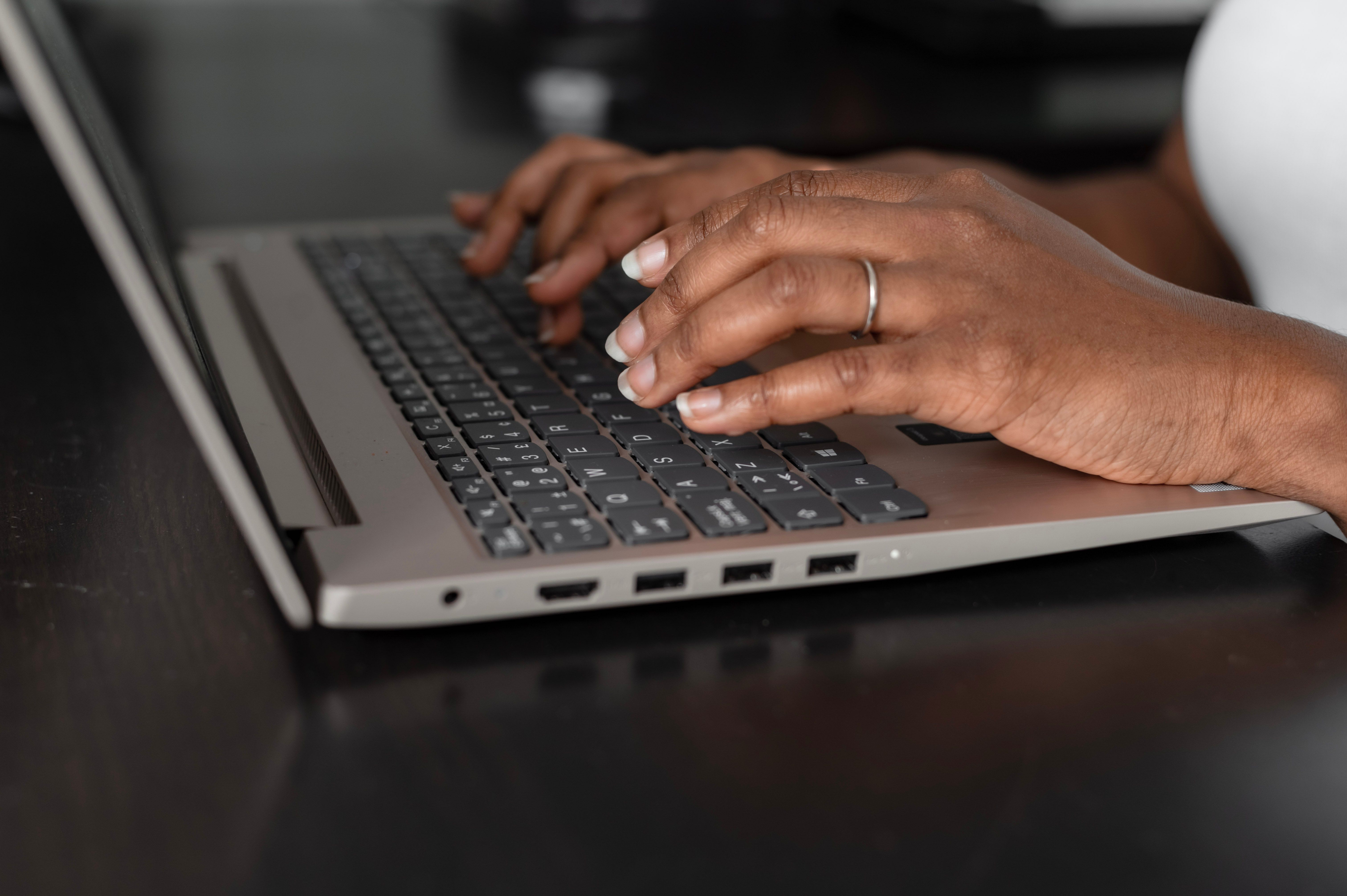
(PNW Production/Pexels)
The ‘Adopt or be left behind’ debate
We live in a world where AI use is a choice that carries both personal and political gravitas. How much water data centres use, how many jobs GenAI displaces and how our data is harvested is affecting both People and Planet in ways that are hard to comprehend long term.
At the same time, proponents argue that a gender AI divide today could shape the future of AI. Any underrepresented groups not using AI at the same rate may risk career regression - and their input and lived experiences may not be reflected in the next wave of AI models.
This tension made headlines when actor Reece Witherspoon advocated for professional women to train in AI. The ‘adopt or be left behind’ discourse is nothing new, but the pushback shows just how layered and impassioned this topic is.
Key criticisms included environmental concerns, intellectual property theft and instability in creative industries. Others argued the backlash exposed a double standard, where female advocates are held to stricter standards and harsher scrutiny.
But perhaps this event also revealed that ‘adopt or be left behind’ has become the primary script for talking about women and AI. And this script makes the AI gender divide read as either another gap that needs to close - or completely reject.
It makes the conversation black and white in a way that sits at odds with the myriad ways AI is affecting our lives.
A gap or a negotiation?
Wherever you stand with AI use, there’s another lens through which to see - and discuss - the AI gender divide. If women are generally adopting this technology at a slower rate, we need to add vocabulary to the conversation: hesitancy and caution may be part of the script, but so might judgment and thoughtfulness.
If AI continues to become part of the workplace, is there a way to negotiate the revolution more meaningfully? Cook and Chippagiri believe so.
“Thoughtful skepticism can be part of responsible AI fluency,” argues Cooks. “The goal shouldn't be teaching women, or anyone, to simply trust AI more. It should be teaching people when to trust it, when to verify it, when to disclose it and when a human needs to stay accountable for the decision.”
Chippagiri adds that we should be careful with the idea of a gender gap and what, exactly, this implies needs to be ‘closed’: “If the goal is to push a more cautious group into faster, less critical adoption, that is the wrong direction. A more conditional approach to AI is not a deficit. It is closer to the standard every professional should hold.”
Not who should change, but what
As of 2026, AI is used in around three-quarters of businesses worldwide. Many of us have, or will, make choices around our use at work, and all in this position deserve access to an AI education that empowers them to exercise critical judgment. This might look like fact-checking GenAI citations, interrogating responses that align with company biases, protecting customer data, knowing AI law and learning about risk-based operation models.
Then there’s the improvement of the technology itself. One important example here is the development of AI tools that use less carbon. These kinds of developments need to be incentivised, and interest from companies and their employees can play a part in shaping this course.
Chippagiri argues that the real gap is one of permission and recognition. “Give everyone the standing to question these tools, and reward critical, responsible use as highly as we reward raw speed. Done that way, closing the gap does not mean women adopting AI more like men. It means the whole workforce adopting a more thoughtful posture, and being valued for it.”
The AI gender divide isn’t a race that men are winning. If lower uptake reflects a careful risk calculation of realworld harms and workplace bias, then it’s a call for improvement from a section of society that is feeling the costs more keenly.

