
Health
Why exercise alone won't protect women from the risks of sitting all day
|
Amberley Davis
Desk jobs could be doing more damage than we realise. From hormonal changes to the "second shift" at home, we explore why women are especially vulnerable to the hidden health risks of sitting.
It may not come as a surprise, but spending eight hours a day sitting at a desk, year after year, can take a serious toll on your health. Prolonged sitting is linked to a higher risk of conditions such as diabetes and heart disease. For women, that risk can be even greater as hormonal changes, caregiving responsibilities and workplace demands add to the cumulative impact.
The solution may not be what you expect. Simply exercising more outside of work doesn't fully offset the health risks of spending most of the day sitting.
“The idea that the health risks come from simply ‘not exercising enough’ is a misconception”, says physician Francesco Bajani. “In reality, prolonged sitting has its own physiological effects.”
He explains that sitting for a few hours at a time dramatically reduces the muscles ability to draw sugar and fat from the blood. This causes insulin spikes and slower blood flow; a pattern that can lead to long term insulin resistance, if repeated over years.
For men and women, the risk list includes obesity, type 2 diabetes, high blood pressure, heart disease and metabolic system. Bajani adds that there is also strong evidence linking sedentary behaviour with certain cancers, depression, anxiety and osteoporosis: “risks that progressively increase when your total daily sitting time increases”.
So why is the risk greater for women? Put simply, sitting is not the only issue. Rather, health experts are finding that many women who sit at a desk for long periods are also disproportionately affected by other health and cultural factors.

(Time Miroshnichenko / Pexels)
How hormonal changes increase the health risks of sitting
There are biological factors that can’t be helped. Hormonal transitions place an additional burden on women during pregnancy, postpartum recovery, perimenopause and menopause; changes that influence fat storage, insulin sensitivity and cardiovascular risk.
Bajani highlights that menopause is particularly significant: “In addition to the above, your oestrogen and muscle mass are in decline. If you’re also sitting for long stretches of time during these physiological changes, your metabolic risk can increase substantially.”
This also helps explain why some women in a healthy weight bracket find themselves diagnosed with fatty liver disease or metabolic syndrome - two diseases we tend to associate with accelerated weight gain and obesity.
Much like our hormones, we don’t tend to see what our clocked desk hours are doing internally. We accept sedentary work habits as the norm, in the same way many women bear additional responsibilities outside of work hours.
How caregiving and workplace demands affect women's health
At home, women often face additional pressures, which Bajati believes compounds these effects. “Many work a full office day and then perform a disproportionate amount of childcare or household responsibilities, reducing the opportunity for structured exercise, recovery or quality sleep,” he says.
Clinician Ross McLean weighs in: “Workplace culture can also make it harder for women to prioritise their own health. Many women spend years juggling demands and, as clinicians, we see the consequences of that every day.
“If women feel they have to choose between attending a health appointment and being seen as committed to their job, health will often lose. The best workplaces recognise that looking after your health isn't a luxury - it's a necessity. Your health deserves to be a priority. When we do diagnose a problem, earlier intervention almost always gives us more options.”
(Kari Alfonso/Pexels)
Why exercise alone might not reverse the effects of sitting all day
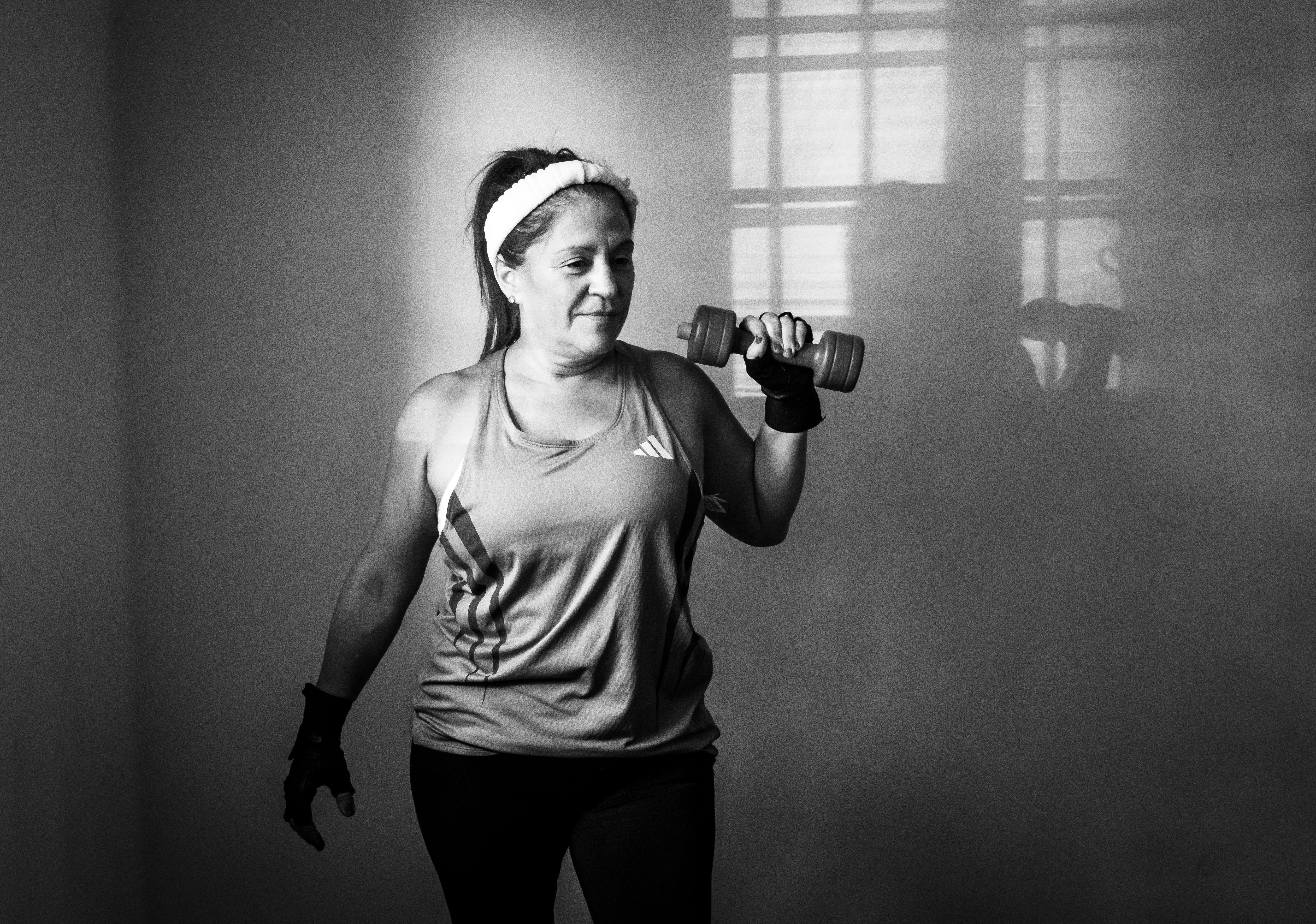
If you have the time, exercising before or after work is certainly more healthy. But experts warn that this isn’t always enough to mitigate the effects of sitting for the majority of the day.
“This surprises many patients,” says Bajati. “A woman who spends nine hours sitting at a desk and then exercises for 30 minutes has certainly improved her health, but she has not completely eliminated the physiological effects of prolonged uninterrupted sitting.”
Current evidence suggests both are important: meeting weekly exercise recommendations alongside, and not in place of, reducing your uninterrupted seated time.
“Think of it like brushing your teeth. Brushing once every evening doesn't completely undo poor oral hygiene all day,” adds Bajati.
And the warning signs can be subtle. In fact, the biggest misconception is to assume that if you have a healthy body weight, sitting all day isn’t affecting your health. Instead, try to monitor your fatigue levels, exercise tolerance and sleep quality. If over time your posture changes, or your neck and back feels progressively more stiff or painful, take this as your cue to get up and move around more regularly.
Standing desk users aren’t off the hook. According to Bajati, while standing is generally better than sitting, it’s regular movement that provides the greatest physiological benefit.
How to reduce the health risks of sitting at a desk
Think small, consistent changes over ambitious plans. To action this at work, Bajati recommends standing every 30 - 60 minutes, walking for 3 - 5 minutes each hour, taking phone calls on the move, using stairs whenever possible and avoiding eating every meal at your desk.
“The evidence suggests that even five-minute walking breaks every hour meaningfully improve circulation, metabolic health and overall wellbeing, making this one of the easiest evidence-based interventions for office workers,” he adds.
And you can absolutely supplement these habits with your outside-hours exercise routine: “perform two or three short strength-training sessions and aim for 150 - 300 minutes of moderate physical activity each week. Maintaining muscle mass through resistance training is especially important during midlife and menopause.”
For McLean, the biggest health benefits rarely come from perfect habits; they come from sustainable ones. “Many women are balancing work pressures, family life and caring responsibilities, leaving very little time for themselves. Health can easily slip down the priority list.”
His advice for professional women? Build simple routines. These include attending screening appointments, understanding what's normal for your body with regular self-examination and seeking advice when something changes.
"I wish more women knew that knowing your own body is incredibly valuable. There’s no need for a strict schedule. It's about recognising what's normal for you so that you notice warning signs."

